
Blog
Managing the Complexity of Mixed-OEM Device Ecosystems
Explore how to manage fragmented Android device fleets across OEMs, AOSP builds, and rugged devices while reducing security risks and total cost of
- 发布日期
- 2025年11月26日
- 更新日期
- 2026年6月11日
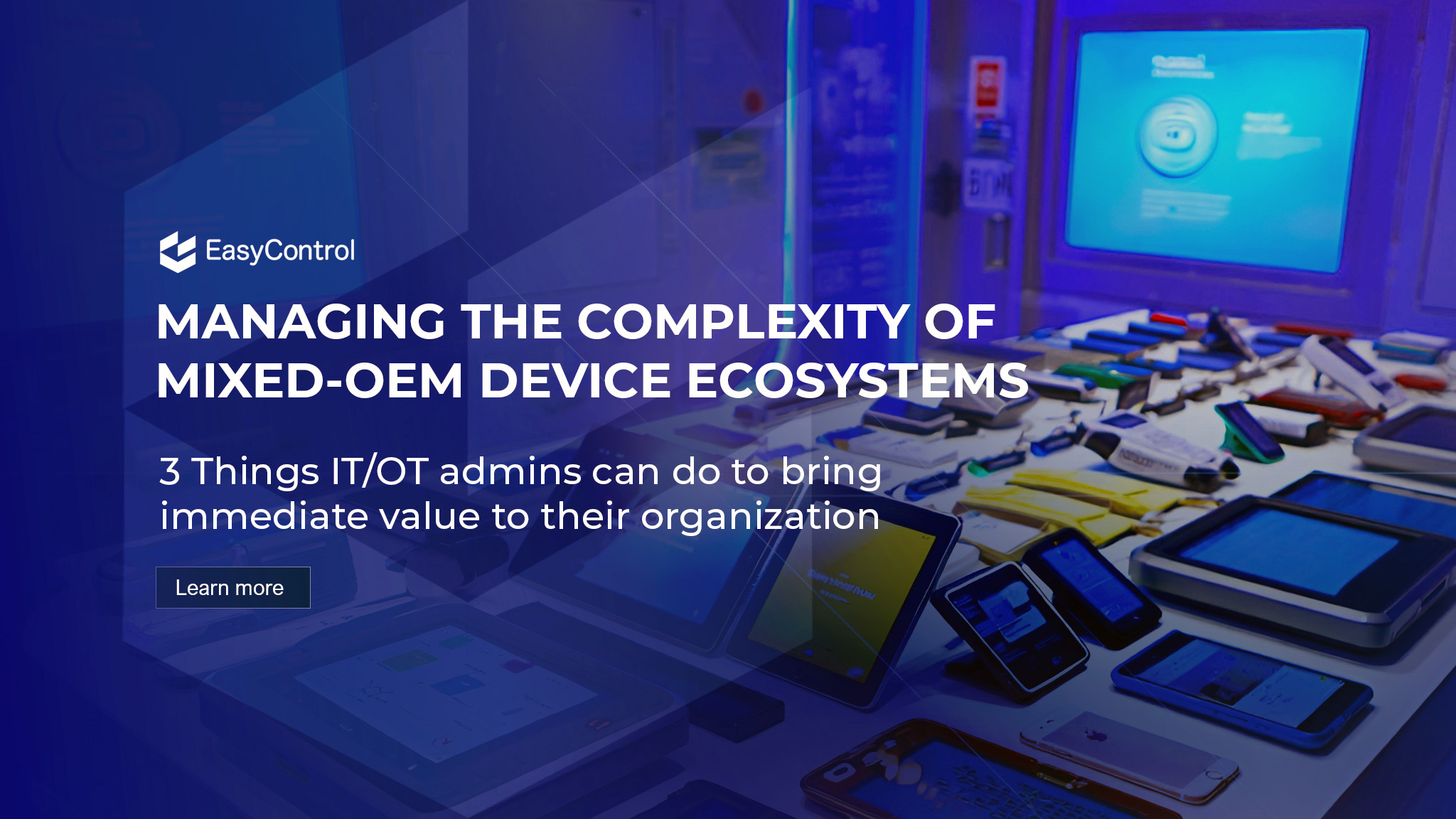
With devices developed on the Android operating system, developers can build apps, integrate hardware, customize the experience, or even modify the Android OS itself—making Android one of the most flexible development platforms in the world. However, this flexibility comes at a cost. Go to any workplace, retailer, supply chain company or service provider today, and you will see a plethora of devices.
- Rugged Samsung tablets in the field
- Lenovo kiosks at the entrance
- Xiaomi employee devices
- Zebra or Honeywell rugged scanners in the back room
- And even ODM Android devices that have no Google services at all
They all say they run “Android,” yet each behaves and works differently.
This is the real problem: modern device fleets are no longer single-vendor — they are ecosystems of manufacturers. Each OEM builds its own variant of Android.
And ecosystems come with fragmentation. Different OEMs serve different use cases. Different enterprises buy what they need. Enterprises mix brands to balance budget, availability, and support. Android has become the standard for many industries enveloped in different form factors, but other operating systems also live inside an enterprise. (including iOS, Win, Linux) The fact is OEMs make significant modifications to the Android framework before shipping it on their devices. Although Android recommended devices standardize on Google Android Enterprise and Google Mobile Services or its vendor-specific OEMConfig file, some OEMs, like Samsung Knox, have extra hardware-backed security features you need to license and integrate. OEMs that build on Android Opens Source Project will have its own specific APK (Android Package Kit). This complexity is now the hidden costs of managing multi-vendor device fleets and mitigating risks. This complexity is not just an IT headache; it is the hidden 10-20% added cost to your Total Cost of Ownership (TCO) for every enterprise device. Fragmentation translates directly to lost labor hours, security vulnerabilities, and most critically, unscheduled device downtime that costs revenue.
This may also include
- Excessive labor costs from juggling dashboards and interfaces.
- Tracking device health and device retirement
- Asset tracking and compliance
- Varying license costs for plugins and integrations
- Managing multiple MDM platforms
So here are at least 3 things that IT and OT administrators can do to reduce the complexity, risks and total cost of ownership:
1. Standardizing Policies Across OEMs
Every OEM adds its own interpretation of Android — unique APIs, background-task rules, power policies, or system settings. This makes “consistent configuration” nearly impossible.
A unified approach aligns these differences into one policy model so IT teams can:
- Enforce kiosk mode across Samsung, Lenovo, Xiaomi, and Zebra
- Apply the same network, USB, or security rules across mixed fleets
- Reduce the failures caused by device-specific quirks
The result: fewer surprises and fewer inconsistencies.
2. Centralizing Security and Device Visibility
Mixed OEMs create mixed blind spots.
One dashboard for standard Android, another for rugged devices, another for custom AOSP builds. Security teams lose visibility. Troubleshooting slows. Compliance becomes guesswork.
Centralizing this view — across all OEMs, OS variants, and device types — restores confidence and control:
- One source of truth for health, alerts, and compliance
- Faster diagnosis across thousands of devices
- A consistent security posture, regardless of vendor differences
Security only works when visibility is unified.
3. Automating Provisioning and Updates
Vendors ship devices with different setup flows, firmware processes, and configuration logic. IT teams spend hours manually fixing “brand-specific” problems.
A unified automation layer allows organizations to:
- Auto-provision any device the moment it powers on
- Push updates and patches across brands at once
- Keep configurations synchronized — without device-by-device cleanup
The outcome is scale — without scaling IT staff.
The Path Forward
Fragmentation isn’t going away. OEM diversity will continue to grow as enterprises adopt more affordable, specialized, and rugged Android devices.
What organizations need isn’t “another device vendor.” They need a unified control plane that harmonizes mixed-OEM environments into one manageable ecosystem.
When policy enforcement is consistent, visibility is centralized, and lifecycle tasks are automated, organizations finally unlock the full value of Android — without inheriting its complexity.
标签
Related Articles
Blog
What Is iOS Device Management? Complete Guide
Why iOS Device Management Matters for Businesses iPhones and iPads have become useful tools for businesses of all sizes. Employees use them to communicate, access company applications, manage customer information, complete fieldwork, and perform everyday tasks. Schools, retailers, healthcare organizations, and hospitality businesses also rely on Apple devices for specialized operations. But managing one or...
2026年9月15日
Blog
Non Compliance and Compliance: A Guide to Compliance Risk Management
Managing hundreds or thousands of smartphones, tablets, rugged devices, and other enterprise endpoints is a major challenge for IT and security teams. Every device that accesses business applications or company data must meet defined security, configuration, application, and management requirements. Understanding device compliance and non-compliance helps organizations determine whether their devices meet these requirements. However,...
2026年8月27日
Blog
What Is a Conditional Access System and Why Is It Important for Zero Trust Security?
Quick Answer: A conditional access system is a security framework that evaluates user identity, device compliance, security policies, location, and risk before granting access to enterprise resources. It is a key part of Zero Trust security because it verifies every access request instead of automatically trusting users or devices. Introduction In the last decade, there...
2026年8月10日