
Blog
Digital IT versus Physical OT
Discover how IT and OT convergence, powered by IoT and EasyControl MDM, is reshaping retail with smarter, secure, and connected operations.
- 发布日期
- 2025年10月23日
- 更新日期
- 2026年6月11日
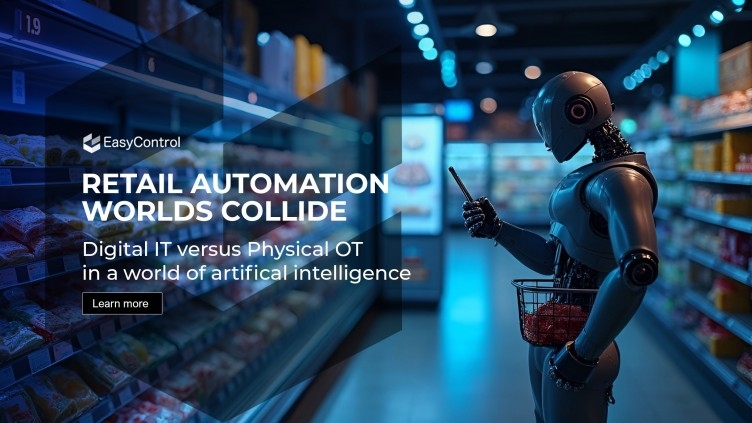
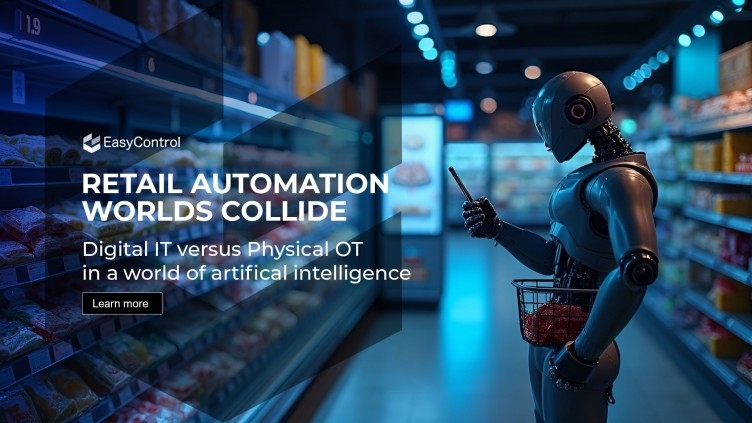
The modern retail store is a machine shop of digital automation. We’re well beyond simple barcodes; today, Electronic Shelf Labels (ESLs), smart cameras, and autonomous inventory robots are becoming the norm. This explosion of technology promises major boosts in efficiency and customer experience, but it rests on a foundational conflict: the messy collision between Information Technology (IT) and Operational Technology (OT) devices. Updating and patching IoT firmware is very different from updating and patching Windows devices or Android tablets.
Historically, IT and OT were strangers. IT dealt with the digital business—data security, email, the Point-of-Sale (POS) system, and the overall enterprise network. Its mantra was, “Protect the data.” OT, on the other hand, managed the physical infrastructure: refrigerators, lighting, electronic shelf labels, and any specialized control hardware that was low powered. Its priority was simple: “Keep things running (like freezers) all the time.” It valued continuity and safety above all else, often running on isolated networks with minimal security updating. Today, those lines are a blur. An ESL is OT hardware, but the price updates it displays come directly from the IT-managed ERP database. This forces convergence, meaning both sides must integrate their systems, protocols, and management strategies to make automation work. ESL is not the only types of devices running in a retail environment.
Why is there a physical and digital divide in retail automation?
A modern retail store has a plethora of IT and OT devices: POS, readers, price checkers, digital signage, registers, and employee-facing tablets, and laptops – all with various management consoles.
- Protocols and operating systems: OT devices often use unique, proprietary communication and encryption protocols (the language the ESL uses to talk to its gateway) due to power constraints. These languages don’t speak easily to heavy standard IT networks. Integrating them requires complex software translators and typically through its own native device management console.
- Security vs. Uptime: This is the biggest hurdle. IT runs on continuous patching and strong authentication. OT often requires machines to run for years without interruption for safety or regulatory reasons. Bringing unpatched, legacy OT devices onto the corporate network creates a security hole, effectively giving a hacker an opening. Eventhough the channel is encrypted, hackers could exploit patching schedules or device topologies. If any part of that bridge—the gateway, the communication channel, or the security policy—is compromised, a hacker gains a foothold in the enterprise network.
- Vendor-specific silos: Automation vendors, like those selling ESLs or bar scanners, typically offer their own proprietary device management software that only works with their specific devices. These closed systems rarely play well with broader IT infrastructure. This creates fragmented management, forcing the retailer to juggle dozens of specialty dashboards instead of managing everything holistically.
The Unification Strategy
Fragmented management is a genuine business risk. A cyberattack exploiting an old, unpatched OT gateway could compromise sensitive pricing or customer data. To fix this, retailers turn to Unified Device Management (UDM) platforms to force the device to comply to rules.
UDM provides the essential framework that aims to solve the convergence crisis. It’s built not just for laptops and employee phones (the usual targets of older systems), but for the vast, diverse fleet of all physical devices in the store.
A UDM platform acts as the connector that organizes all the various the devices under a single management console – from device enrollment through retirement:
- Security Orchestration: It applies enterprise-grade security—like Zero Trust protocols and automated policy enforcement—to every single device, regardless of whether it’s a self-checkout kiosk or a proprietary electronic shelf label gateway.
- Single Pane of Glass: It delivers a single dashboard for monitoring all device health and compliance. This ends the era of switching between multiple vendor-specific consoles just to see if a price tag, kiosk, and scanner is working correctly.
- Integration Layer: UDM serves as the crucial control between the IT-managed devices and the vendor-specific OT systems. The ERP provides one set of compliance rules to the UDM, and the UDM handles the translation required to instantly configure and enforce the myriad thousands of physical devices.
Instead of all the devices colliding with each other, UDM allows retailers to harvest all the benefits of automation—speed, accuracy, and data insight—while ensuring every piece of hardware operates with the security and reliability the managed service provider demands. It’s the essential step from having a collection of smart devices to running a truly intelligent and efficient retail store.
标签
Related Articles
Blog
What Is iOS Device Management? Complete Guide
Why iOS Device Management Matters for Businesses iPhones and iPads have become useful tools for businesses of all sizes. Employees use them to communicate, access company applications, manage customer information, complete fieldwork, and perform everyday tasks. Schools, retailers, healthcare organizations, and hospitality businesses also rely on Apple devices for specialized operations. But managing one or...
2026年9月15日
Blog
Non Compliance and Compliance: A Guide to Compliance Risk Management
Managing hundreds or thousands of smartphones, tablets, rugged devices, and other enterprise endpoints is a major challenge for IT and security teams. Every device that accesses business applications or company data must meet defined security, configuration, application, and management requirements. Understanding device compliance and non-compliance helps organizations determine whether their devices meet these requirements. However,...
2026年8月27日
Blog
What Is a Conditional Access System and Why Is It Important for Zero Trust Security?
Quick Answer: A conditional access system is a security framework that evaluates user identity, device compliance, security policies, location, and risk before granting access to enterprise resources. It is a key part of Zero Trust security because it verifies every access request instead of automatically trusting users or devices. Introduction In the last decade, there...
2026年8月10日